Can the social aspect of apps built to track fitness enhance motivation, or does it risk mental fatigue and performance anxiety?
Key words: social media, fitness tracking, mental health
Introduction
There is no question of doubt that in today’s culture, social media platforms and fitness tracking apps come hand in hand. Athletes from all sports and skill ranges use apps to track their exercise, fitness, and nutrition, as well as share progress, seek motivation and a form of accountability. This constant exposure to comparison and digital performance pressure raises questions about whether these tools embedded in the fabric of fitness tracking support or sabotage our wellbeing, physically and mentally.
When motivation meets metrics
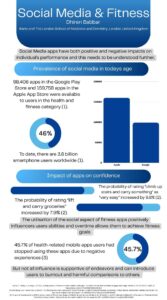
The growing implementation of social media into fitness tracking apps can foster a real sense of community, consistency and goal tracking. These apps have seen user rates exponentially grow and their applications range from personal use to use in clinics by surgeons, physiotherapist and dieticians (1). Alleviating global health burdens and providing preventative screening, they are deemed as a useful tool for clinicians.
The motivation to utilise their social side has only spiked in recent years, especially after the COVID-19 pandemic, where a surge in posting alleviated user anxiety levels (2). Now the effects of such posting patterns and sharing of personal fitness data has been shown to positively impact users’ looking up to fitness influencers for motivation driven by self-efficacy (3). The positive effects of this social craze seem to bear fruit for influencers themselves and not just for scrollers. Posts depicting either positive or negative mannerisms fosters an overall community supplying encouragement and social support (4).
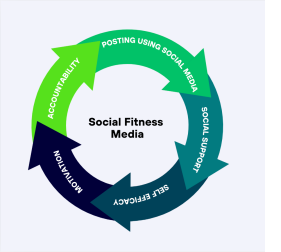
This space is only every growing, with the ability to
- Specialise features for specific training routines or communities.
- Providing educational and teaching opportunities.
- Create the ability to generate revenue for individuals or organisations.
Relationships and communities have been created as a result of this craze with some of the most common being run clubs, racket sport tournaments, field sport tournaments and even social events. These events within themselves boost mood, encourage participation and force oneself to commit to their goals and objectives. Another interesting aspect to consider is how sharing achievements adds a sense of realism to viewers…if people elsewhere can do it, why can’t I?
The trap: image, comparison and burnout
It is no hidden truth that the use of social aspects within fitness apps come with a potentially heavy burden especially in adolescent athletes (5). The aspect of comparison can influence:
- Body image
- Intrinsic motivation
- Mental health
This concept as a whole is referred to as ‘Social Comparison’ theory, first postulated by Leon Festinger. It states how comparing oneself to others is a basic human need. As well as superior and upward comparisons, there is an equal chance for spiralling downward manifestation (6).
Clinically, these manifestations are of utmost importance. Not only for the psychosocial burden they pose, but also from a sports medicine perspective as people
- Increase their injury risk from overtraining to meet public demands and ‘likes’
- Are less likely to rest and therefore become more susceptible to injury
- Are more likely to ‘cheat’ to get the desired effect quicker
- Harm themselves managing unrealistic dietary regimes
And on top of all that, imagine the anxiety if your 5 day work out streak was broken because you forgot to post it…
Finding the balance:
So this poses the ultimate question. How can clinicians guide healthy social habits to promote the most out of fitness tracking? Well, here are some ideas that come to mind as a student athlete:
- Have media reviewed by clinical personnel, coaches and even other athletes, much like we peer review our written literature.
- Normalise healthy habits such as days off and a good work life balance to reduce injury burden.
- Perhaps every once in a while, a Digital Health Self Checklist can be built into these apps, making sure it’s the right time to post and deal with both good or bad consequences.
Conclusion – Key Takeaways:
- Social media and fitness tracking can enhance accountability, but only when guided by self-awareness and purpose.
- Practitioners should recognise digital behaviours as part of holistic athlete health.
- A balanced approach may contribute to injury prevention and protection of both motivation and mental wellbeing.
Author names & affiliations
Dhiren Babbar BSc, MBBS Candidate – Barts and The London School of Medicine and Dentistry, London, United Kingdom.
References
- Bo Y, Liu QB, Tong Y. The Effects of Adopting Mobile Health and Fitness Apps on Hospital Visits: Quasi-Experimental Study. J Med Internet Res. 2023 July 28;25:e45681.
- Qin X, Yang F, Jiang Z, Zhong B. Empathy Not Quarantined: Social Support via Social Media Helps Maintain Empathy During the COVID-19 Pandemic. Soc Media Soc. 2022 Jan 1;8(1):20563051221086234.
- Kim HM. Social comparison of fitness social media postings by fitness app users. Comput Hum Behav. 2022 June 1;131:107204.
- Wang Y, Wang X, Liu H, Xie X, Wang P, Lei L. Selfie posting and self-esteem among young adult women: A mediation model of positive feedback and body satisfaction. J Health Psychol. 2020 Feb 1;25(2):161–72.
- Lin W, Cen Z, Chen Y. The impact of social media addiction on the negative emotions of adolescent athletes: the mediating role of physical appearance comparisons and sleep. Front Public Health. 2024;12:1452769.
- Ozimek P, Brandenberg G, Rohmann E, Bierhoff HW. The Impact of Social Comparisons More Related to Ability vs. More Related to Opinion on Well-Being: An Instagram Study. Behav Sci Basel Switz. 2023 Oct 17;13(10).