Under the theme “Together for health. Stand with science”, World Health Day (7 April) launched a year-long campaign highlighting the power of scientific collaboration to protect the health of people, animals, plants, and the planet through the One Health approach.
Speaking to countries across the South-East Asia Region, Dr Catharina Boehme emphasized WHO’s leadership not only in scientific achievements but also in fostering multilateral cooperation to turn evidence into action.
Scientific progress is accelerating, yet trust in science is under strain. In an era of interconnected health threats, leaders must redesign research systems to be more transparent, integrated, and inclusive—reconnecting evidence with policy and society.
Trust in Science Is Now a Leadership Test
Trust in science is no longer purely a technical issue—it is a test of leadership. Governments and institutions rely on evidence to guide decisions shaping health, economies, and security. Yet public confidence remains uneven, even as scientific capability advances at unprecedented speed.
Science underpins modern life—from safe water and food to pandemic preparedness. Yet for many, research feels distant, complex, and opaque. Leadership systems have not kept pace with the need to make evidence visible, accessible, and actionable. Fragmented communication and closed governance structures too often obscure knowledge that should guide public action.
This gap carries tangible consequences. Antimicrobial resistance, zoonotic diseases, and climate-related health risks demand coordinated, science-led responses, yet policy often lags behind evidence, and public understanding remains limited.¹ Rebuilding trust requires systemic change—not incremental fixes.
Leading in an Interconnected Risk Landscape
Today’s defining health challenges emerge at the intersection of human, animal, and environmental systems. Yet leadership and research structures remain siloed across sectors, disciplines, and institutions.
The COVID-19 pandemic showed both what is possible and what is at risk. Scientific collaboration enabled the rapid development of vaccines, but fragmented surveillance, limited data sharing, and uneven governance weakened the timeliness and equity of the global response.
Across South-East Asia, uneven research capacity and limited community engagement in priority-setting continue to constrain impact, resulting in duplication, delays, and missed opportunities to translate evidence into policy.³
Geopolitical tensions add further complexity. Increasing restrictions on data and technology—while often justified—risk fragmenting global science ecosystems and slowing innovation.² Leaders must balance national priorities with the shared benefits of open, collaborative science.
From One Health Ambition to System Leadership
The One Health approach recognises the interdependence of human, animal, and environmental health. For leaders, it is not just a framework, but a model for systems transformation.
Operationalising One Health requires leadership that connects ministries, research institutions, and communities—ensuring that evidence flows across boundaries and informs coordinated action. Without integration, One Health risks remaining aspirational.
Participatory research models, in which communities contribute to surveillance and study design, generate more relevant and trusted evidence.⁴ Digital innovation strengthens this shift: electronic research management and ethics platforms can streamline processes, enhance transparency, and expand participation, including community oversight.⁶
Rebuilding the Relationship Between Science and Society
System reform alone is insufficient without a shift in how science engages with society. Leaders must ensure that evidence is not only generated but understood and trusted.
Concepts such as antimicrobial resistance or zoonotic spillover must be communicated in ways that resonate beyond technical audiences. This requires sustained investment in engagement strategies that connect science to lived experience.
Citizen science, participatory priority-setting, and community-based surveillance are central—not peripheral—to rebuilding trust. When people help shape research, they are more likely to trust and act on its findings. This represents a shift from delivering science to co-producing it.
A Leadership Agenda for Trust
Rebuilding trust in science demands a renewed social contract grounded in transparency, equity, and collaboration. Key priorities include:
- Integrate governance across sectors to operationalise One Health
- Digitise research systems to improve transparency, efficiency, and accountability
- Engage communities as partners in shaping research and solutions
At the global level, scientific knowledge—from genomic data to climate models—must be protected as a public good. Open science and FAIR data principles provide a pathway to more equitable and effective systems.⁵
The stakes are high. In an interconnected world, fragmented science is a shared vulnerability. Integrated, inclusive, and transparent systems, by contrast, deliver collective security and sustained public trust. Leadership today is not only about defending science—it is about redesigning the systems that produce and apply it.
Leading Science for Health in South-East Asia, on One Health and Beyond
Dr Boehme emphasised that standing with science means more than believing in it: it means delivering it—through stronger systems, trusted institutions, and partnerships.⁷ With countries in the Region, WHO launched a strategic framework to operationalise this agenda.
The Banyan Framework for Health and Well-Being in the WHO South-East Asia Region⁸ that goes beyond One Health to broader application of science to progress on integrated primary health care (PHC) for universal health coverage (UHC). It advances people-centred, preventive, and community-based care that connects human, animal, and environmental health while addressing wider determinants such as education, housing, and livelihoods.
Its four priorities—reorienting systems towards well-being and prevention, strengthening decentralised community engagement, enabling multisectoral action, and investing in resilient financing, workforce, and governance—are anchored in strong data and learning systems. By embedding continuous evidence generation, real-time data use, and feedback loops into decision-making, the framework enables adaptive, context-specific, and accountable policy.
For leaders, integrated PHC becomes more than a service delivery platform; it translates science into coordinated action and accelerating progress towards UHC and population well-being. Ultimately, science saves lives, but only if we make it work for people.⁷
References
- Rabinowitz PM, et al. A planetary vision for One Health. BMJ Global Health. 2024.
- Blankart CRB, et al. Health literacy, governance and systems leadership for One Health implementation. Health Policy. 2024.
- Faijue D, et al. Governance architectures for One Health: stakeholder engagement and collaboration. European Journal of Public Health. 2024.
- Asaaga FA, et al. Understanding One Health networks for zoonoses prevention in India. One Health Outlook. 2024.
- Mohanty TK, et al. Open science policy guidelines: FAIR data sharing in LMIC research. Journal of Global Health. 2025.
- Rani M, et al. Digital research management and ethics platforms in strengthening national research governance. Health Research Policy and Systems. 2024.
- Dr Boehme on WHO leadership and science
- Banyan Framework for Health and Well-Being in SEAR
Author
Catharina C. Boehme
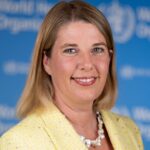
Dr Catharina Boehme is a public health expert with over 20 years of experience at the intersection of strategy, policy, and innovation, with 15 years in leadership positions.
Dr Boehme is currently Officer-in-Charge, WHO South-East Asia Region. Prior to this, Dr Boehme, was WHO’s Assistant Director-General for External Relations and Governance. Previously, as Chef de Cabinet to the WHO Director-General she played a key role in driving organizational reform and embedding gender and equity into WHO’s work.
Before joining WHO, Dr Boehme was CEO of FIND, where she transformed the organization into a global diagnostics leader operating in over 40 countries. In her early years as a medical doctor, Dr Boehme was with the Department of Infectious & Tropical Diseases, Munich. Here, in addition to hands-on medical care, her work included efforts towards inclusive and sustainable solutions to strengthen health systems in underserved settings, with notable practical application in Tanzania, South Africa and Ghana.
Declarations of Interest
No interests to declare.