The Chief Medical Officer* (CMO) role is changing fast. So fast, potentially training can’t keep up. This is an important development as the stakes for effective leadership have never been higher. Today’s CMOs need to manage clinical governance, shape workforce culture, and drive strategic reform – often simultaneously – with limited support, competing operational priorities and often professional isolation. The question is not whether they need to be adaptive and influential – we could argue these are cornerstone to effective leadership. It is whether these emerging leaders are trained and equipped to be adaptive and influential in this rapidly changing world.
At the 2025 Royal Australasian College of Medical Administrators (RACMA) Annual Conference, health leaders from different jurisdictions and backgrounds, were brought together and facilitated by experts from RACMA and the Nous Group – an Australian management consultancy. There, we explored topics of what it means and what is required to be a medical leader of the future, as well as the evolving role artificial intelligence (AI) could play in supporting their performance. This was achieved through an expert panel and small group discussions, building on a previous event that examined the future of the CMO and the capabilities needed to lead effectively through the challenges of 2030 and beyond.
The new standard: core capabilities for medical leaders in 2030 and beyond
In small group discussions, participants mapped out what CMOs will need to succeed in 2030 and beyond. Eight capabilities emerged as non-negotiable:
- Adaptive and agile: comfortable with uncertainty, and able to pivot quickly when circumstances change.
- System and policy savvy: understands how incentives work, where the political pressure points are, and how to influence across organisational boundaries.
- Communication and influence: visible, accessible, and able to translate complex ideas for different audiences.
- Ethical and emotional intelligence: leads with integrity and empathy and builds trust through reflective practice.
- Digital and AI literate: uses data and AI responsibly to inform decisions about governance, quality, and strategy.
- Executive discipline: knows how to prioritise, make decisions, and deliver results that connect to broader organisational goals and strategies.
- Culture and people stewardship: creates psychologically safe environments where staff can perform at their best.
- Curious and future‑focused: scans the horizon for emerging trends, learns continuously, and helps the system adapt.
These findings largely confirmed what emerged from our earlier work, but participants pushed further on three areas:
- Emotional intelligence,
- Executive discipline, and
- Political acumen.
Together, they offer a comprehensive view of the evolving requirements for medical leadership.
Risks and challenges
Participants expressed optimism about the potential for future-ready medical leadership, but identified significant risks and challenges to implementing these new capabilities.
A major concern was the rapid advancement of AI, which could outpace the sector’s ability to integrate and govern effectively, or even misdirect priorities if not carefully managed. Ensuring equitable opportunities for capability development across metropolitan, regional, rural, and remote settings was seen as essential, yet difficult given ongoing resource constraints and workforce pressures.
Then there are the structural barriers. Entrenched supervisory models, and the tension between soft and hard competencies were highlighted as real barriers to change. Several participants pointed out that we do not have effective frameworks to teach future medical leaders, let alone effective methods to assess someone’s progress and capabilities.
Participants warned that lost trust, leadership isolation, and the risk of “dropping the ball” could undermine progress. Bureaucracy, funding limitations, and human reluctance to change were recurring themes, alongside the challenge of engaging stakeholders and facilitating meaningful training pathways. Without adequate support, the increasing demands on CMOs could lead to burnout and further workforce challenges.
Measuring Success
To evaluate the impact of these changes, participants proposed a mix of short- and long-term metrics across four areas:
- Health system performance: Improved clinical outcomes, reduced wait times, enhanced bed flow, and higher quality and safety metrics.
- Leadership development: Increased workforce capability, successful succession planning, and higher engagement and retention among CMOs and trainees.
- Organisational culture: Greater staff satisfaction, improved workforce sustainability, reduced sick leave and exit rates, and strengthened collaborative decision-making.
- Strategic influence: Evidence of CMO-led reforms, enhanced RACMA visibility, and measurable improvements in system agility and functionality.
AI and medical leadership
AI was as a central theme in both the expert panel and small group discussions. Participants saw general potential for AI to support medical leaders, but only if it is implemented safely and ethically. A serious breach of clinical data would be catastrophic, not just for patients, but for public trust in the entire health system.
Participants identified several practical applications:
- Strategic planning by synthesising population health trends, highlighting inequities, and informing evidence-based decisions.
- Predictive analytics using large-scale epidemiological and clinical data could help identify risks earlier and shift care from reactive to proactive.
- Performance monitoring by using real-time dashboards to track patient outcomes, flow, and clinician activity, giving leaders visibility they have not had before.
- Data integration by securely linking health data across different settings, enabling transparent, collaborative leadership.
- Administrative efficiency by summarising complex discussions, automating routine tasks, and streamlining access to relevant information.
What happens next?
RACMA and other specialist medical colleges need to redesign their training programs, not just add a module on AI, but fundamentally embed these leadership capabilities into assessment and continuing professional development. This needs resources, and it takes will at every level of governance including government.
Government and health system leaders have a critical role too. Funding and policy support for leadership development cannot be an afterthought. The current pace of change is not keeping up with what CMOs actually need, in order to do their jobs effectively in 2030 and beyond.
This is also not about one organisation acting alone. It requires collaboration across colleges, health services, and government. But someone needs to make the first move and specialist medical colleges are the logical starting point as the training providers of the next generation of clinical leaders who will transform the health system.
Better-prepared leaders translate to happier leaders, and in turn, better outcomes for patients, clinicians, and communities.
*The term Chief Medical Officer or CMO is interchangeable with terms inclusive of, but not limited to: executive director of medical services, chief health officer, health service executive, medical executive, physician executive or leader, senior medical leader
Acknowledgements: We acknowledge the contributions of Daniel Makarounas, Manager, Nous Group, Katherine Christopher, Manager, Nous Group, and Hudson Delves, Director, Nous Group.
Author
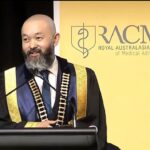
Professor Erwin Loh
Prof. Loh is President of the Royal Australasian College of Medical Administrators and National Director of Medical Services for Calvary Health Care. He was previously Group Chief Medical Officer at St Vincent’s Health Australia, Chief Medical Officer at Goulburn Valley Health and Chief Medical Officer of Monash Health. He has qualifications in medicine, law and management. He has adjunct professorial appointments at Monash University, University of Melbourne and Macquarie University. He has been an invited speaker at local and international conferences, and has published books, book chapters and journal articles on leadership, governance, AI and health technology. He is a member of the Association of Professional Futurists. He received the Distinguished Fellow Award from RACMA in 2017 for “commitment to governance, research and publication”.
Declaration of interests
I have read and understood the BMJ Group policy on declaration of interests and declare the following interests: President of RACMA; Associate Editor for BMJ Leader

Dr. Paul Eleftheriou
Declaration of interests
I have read and understood the BMJ Group policy on declaration of interests and declare the following interests: Principal, Nous Group