Ruth Mabry & Jawad A. Al-Lawati
The 2026 World No Tobacco Day (WNTD) theme calls for stronger policies to protect youth and targets the marketing of e-cigarettes and similar products as innovative or less harmful aimed at attracting new users, particularly young people. With stricter bans on tobacco advertising, the tobacco industry reverts to corporate social responsibility (CSR) as their main tactic to polish their public image and undermine tobacco control. By associating with positive causes like education, health and social welfare, the tobacco industry aims to maximize profits with devastating health consequences. A study of tobacco industry social media posts found that one in five were about CSR and the supposed positive impact they have on society and the environment.
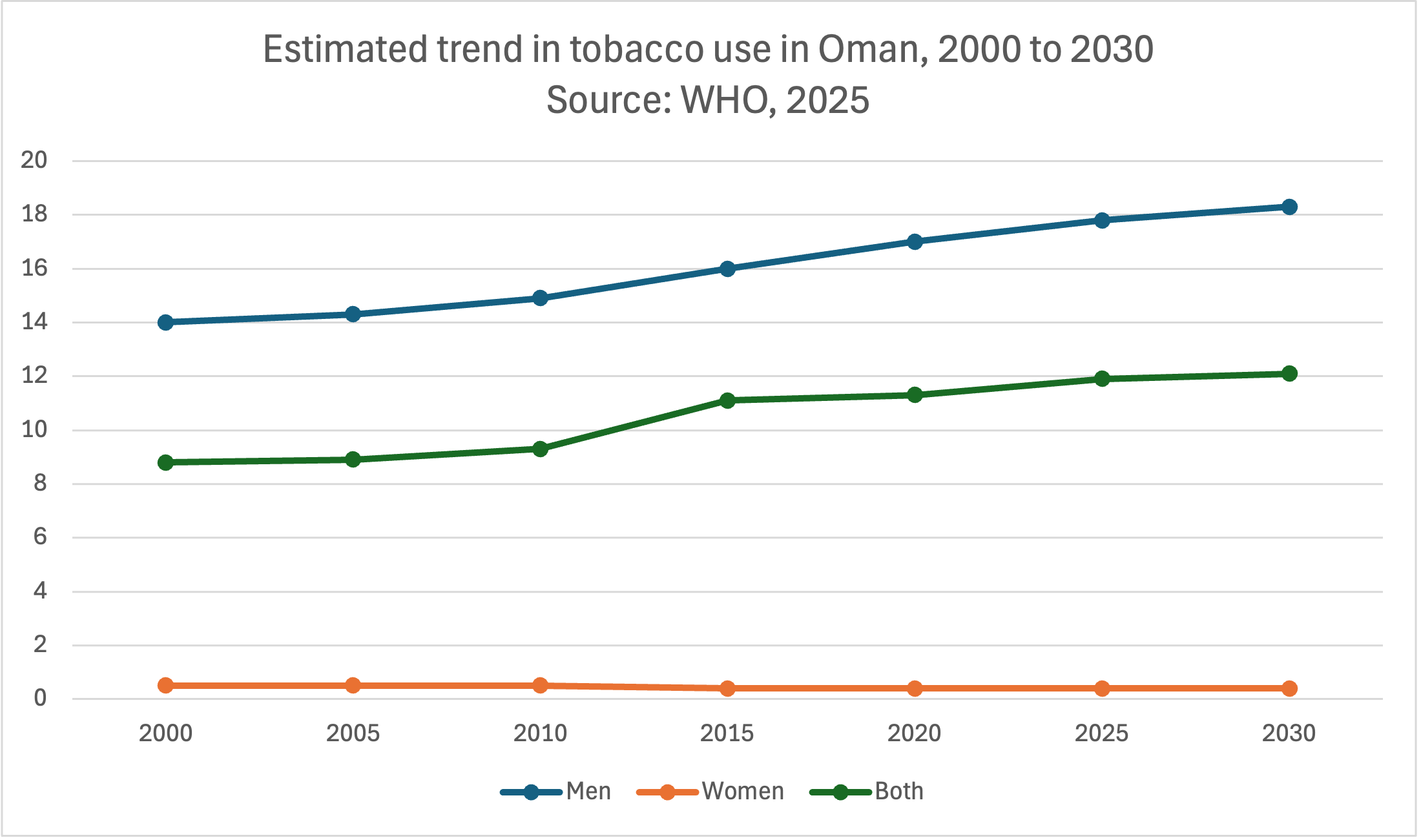
This is all very relevant in Oman. E-Cigarettes and similar products were banned in Oman in 2015 (see here and here); and penalties for their possession were tightened in 2023. Smoking prevalence in Oman, an Arab nation with a population of less than 5 million, is low, estimated at 8.5% in 2022 compared to the average of 18.0% in the Eastern Mediterranean Region. However, the country is one of three in the region at risk of an increase in tobacco use, especially in men (Figure 1). Additionally, the Global Youth Tobacco Survey 2016 found that 6.3% of adolescents aged 13 to 15 years in Oman used tobacco; 5.3% currently used electronic cigarettes; however, more than four in 10 had ever used e-cigarettes. Although the most recent nationally available data on youth tobacco use are over a decade old, international and regional trends indicate rising uptake among young people. In this context, Oman initiated a nationwide, year-long tobacco control campaign targeting youth in January 2025.
Oman ranked 14th among 100 countries in the Global Tobacco Industry Influence Index 2025 indicating a low overall level of industry interference. However, tobacco industry CSR activities represent a significant gap in Oman’s implementation of Article 5.3 of the WHO FCTC, which aims to protect public health policies from tobacco industry influence. CSR initiatives can help the tobacco industry build relationships and improve its public image, thereby facilitating influence over policy processes.
In addition to CSR activities, the tobacco industry in Oman has engaged in direct policy interference, including efforts to prevent increases in tobacco taxation, undermine smoke-free policies and advertising bans, delay regulations on tobacco product contents, and impede the implementation of effective health warnings, including requests to postpone the adoption of plain packaging. Distributors for British American Tobacco (BAT) and Phillip Morris International (PMI), who dominate Oman’s tobacco market, have engaged in extensive CSR activities domestically and promoted these on social media. Publicly available posts show tobacco industry involvement in activities linked to education, health, sports, and community development. Examples of these activities are illustrated below in Figures 2-4.

Figure 2. A charity event for families in a local park.
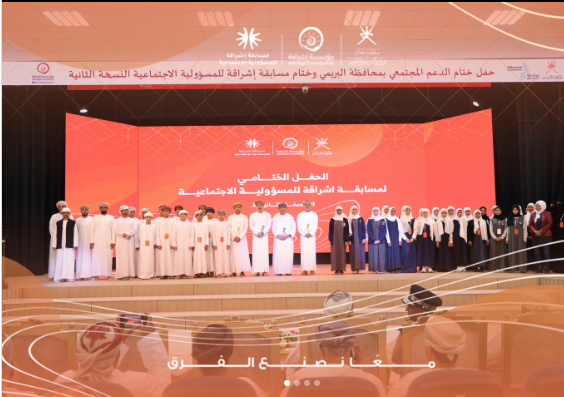
Figure 3. Celebration of winners of a student CSR competition.

Figure 4. Donation of beds to a medical institution.

Figure 5. Signing a Memorandum of Understanding (MoU) with government officials for the STEMA Zone Center
Additionally, nearly one in ten tobacco industry-organized CSR events involved ministers and other high-ranking government officials in Oman, providing public endorsement of tobacco industry activities. It also enables access to and dialogue with policymakers, and opportunities for agenda setting in favour of the tobacco industry, though it remains unclear whether policy issues were discussed during these encounters. Not only have the tobacco industry been recognized for these efforts (see here and here) but the official registration of PMI’s CSR arm as an NGO shows how tobacco industry CSR have become normalized in the country.
The consequences of these actions, are profound, threatening public health and perpetuating the tobacco epidemic. While Oman has banned tobacco advertising and promotion through ministerial decisions (here, here and here), the regulations do not comprehensively ban sponsorships. CSR contributions fall under Articles 5.3 and 13 of the WHO FCTC ratified by Oman in 2005, and should be prohibited as part of a comprehensive ban on tobacco advertising, promotion and sponsorship. By closing this loophole Oman can safeguard its tobacco control policies from manipulation and ensure that public health takes precedence over corporate interests.
Authors:
Ruth Mabry, Global Health Consultant, Muscat, Oman.
Jawad A. Al-Lawati, Department of Health Promotion, Ministry of Health, Oman.
Acknowledgements: The authors wish to thank Stella A. Bialous, Center for Tobacco Control, University of California, Talal A. Al Enazi, King Abdulaziz Medical City, Juanita Albert and Jokha Y. Al-Rashdi, Directorate General of Primary Health Care, Ministry of Health, Oman.