Martin Drago, Cassandre Bigaignon & Jorge Alday
A new report, Behind Closed Doors: How the Tobacco Lobby Influences the European Union and Beyond, exposes the scale and tactics of well-resourced, coordinated tobacco industry lobbying at the heart of decision-making within the European Union (EU) and its current focus on increasing the availability of the industry’s addictive, harmful products. Drawing on analysis of EU transparency registers, other public records and extensive freedom of information (FOI) requests, our analysis reveals a concerted effort by tobacco companies—particularly Philip Morris International (PMI)—to both influence EU policy and leverage the EU’s diplomatic and trade power to undermine policy well beyond Europe’s borders.
As a Party to the World Health Organization Framework Convention on Tobacco Control (FCTC), the EU is obliged to strictly limit interactions with the industry, ensure full transparency when contact is unavoidable and not promote the industry’s interests. A previous investigation in 2015 led the European Ombudsman to call for full implementation of FCTC rules and guidelines governing transparency and tobacco lobbying, affirming that “The UN framework applies to all EU institutions.” Furthermore, another inquiry by the Ombudsman concluded in 2023 that there is a case of maladministration within the European Commission “concerning the transparency of interactions with tobacco industry.”
The new report reveals that industry influence still permeates the corridors of power in the European Parliament, the European Commission and the EU Council. Between 2023 and September 2025, 257 meetings between tobacco industry lobbyists and Members of the European Parliament (MEPs) were officially recorded, with PMI alone accounting for 121 of those meetings. The contrast with the access afforded to health advocates is stark. The Smoke Free Partnership, representing almost 60 European organisations working in tobacco control, had only 12 meetings with MEPs during the same period. Furthermore, these 257 meetings were only the meetings that were declared. Within the European Commission, the low number of meetings declared reflects the overly narrow scope of EU transparency rules. Our FOI requests revealed multiple undisclosed contacts within EU institutions. This was particularly notable for the Directorate General for Trade (DG TRADE) (responsible for developing and implementing the EU’s trade policy), and included undeclared meetings and sustained exchanges.
We identified 49 lobbying organisations actively working to advance tobacco industry interests, cultivating relationships across multiple EU institutions and ensuring the industry’s views are consistently represented in policy debates. These include cigarette makers, Brussels-based trade groups, lobbying firms and newer “harm reduction” advocates tied to the industry, employing at least 139 people dedicated to influencing EU decision-makers. In 2025 alone, the industry declared participation in over 58 public consultations and contributions to 56 ‘roadmaps’ related to EU policy.
Maintaining this level of influence is expensive. Collectively, the big four global cigarettes companies – PMI, British American Tobacco, Japan Tobacco International and Imperial Brands – account for around €10 million of the industry’s estimated €14 million annual EU lobbying spend. These figures are self-declared by the tobacco industry and are likely to be an underestimation.
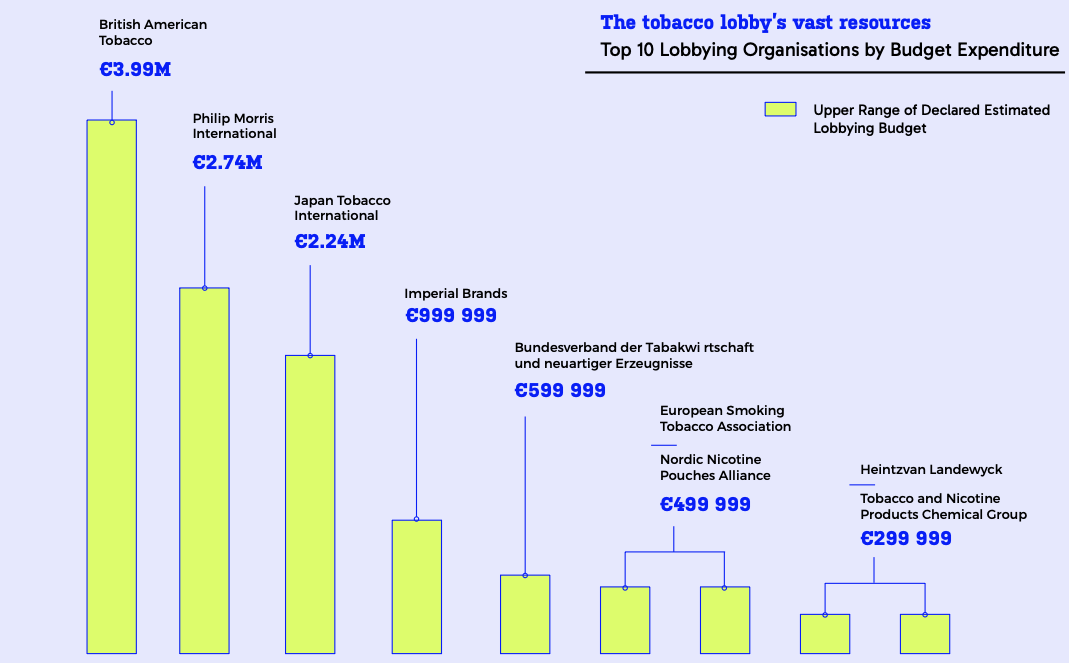
Figure 1. Tobacco Industry Lobbying in the EU: Top 10 Lobbying Organisations by Budget Expenditure
Evidence reveals three strategies aimed at frustrating regulation of industry’s newer products. First is escalating use of the industry’s false “harm reduction” narrative for addictive and harmful products such as heated tobacco products (HTPs), e-cigarettes and oral nicotine pouches. This is the focus of 15 lobbying groups, eight of which were created within the last three years. With this strategy, industry is trying to build credibility, gain access to policymakers and influence regulation, despite growing evidence of health harms and youth use. Second, is significant investment in certain EU Member States such as Greece, Italy and Sweden, among others, creating financial ties that the tobacco industry can leverage to exert influence. These financial ties create structural dependencies that may translate into increased influence at EU level, including within the European Parliament and the Council. Third is lobbying the EU to act on industry’s behalf. PMI frequently engaged with DG TRADE regarding regulations in at least 10 non-EU countries, framing health policies unaligned with its corporate interests as trade barriers. For example, in Türkiye, tobacco products must contain 30 percent locally sourced tobacco. PMI supplied EU officials with questions to raise at a World Trade Organization meeting and asked for the issue to be referenced in a report assessing Türkiye’s progress toward EU enlargement. In an email, PMI thanks DG TRADE for “the actions that you took.”
Additionally, the company asked whether India’s 2019 ban on HTPs could be raised during EU–India trade negotiations and similarly portrayed bans on HTPs and e-cigarettes in Singapore, Mexico, and Brazil as trade barriers or breaches of trade agreements. Apart from Türkiye, it is not clear whether the EU acted on these requests.
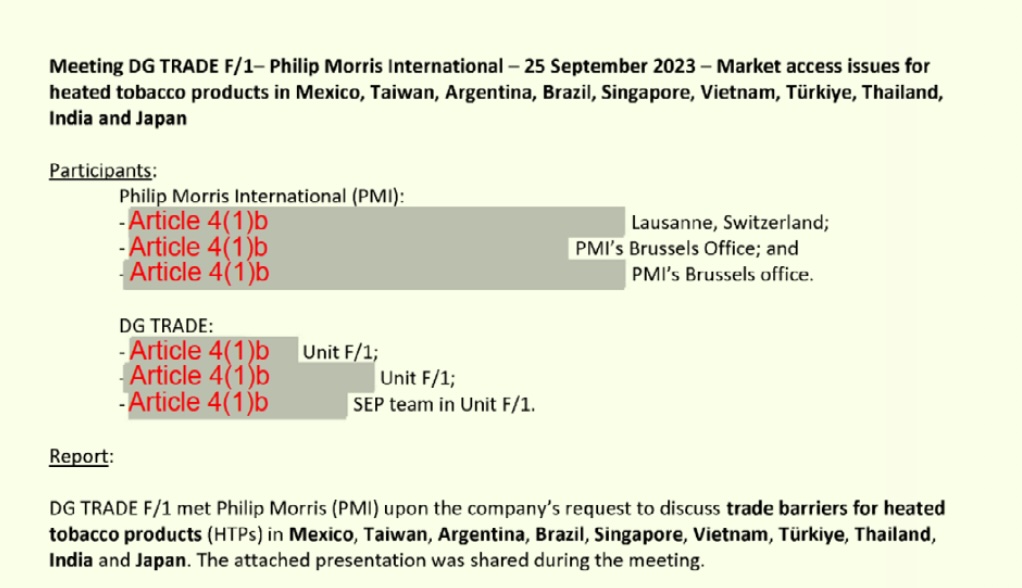
Figure 2. Example of a Document Obtained by FOI Request Concerning a Previously Undeclared Meeting in September 2023 Between DG TRADE and PMI.
In response to reporting on these new findings, five members of the Parliament’s health committee say they want to investigate these apparent violations of the EU’s Article 5.3 obligations, particularly the interactions with PMI.
The evidence and solutions are clear. The EU and all its institutions must fully implement and ensure compliance with Article 5.3 of the FCTC across all staff and departments. Obligations must be binding, with strict controls and penalties. Interactions must comply with Article 5.3, occurring only when absolutely necessary and subject to full transparency.
WHO reports that Europe remains one of the regions hardest hit by the tobacco epidemic, with around 700,000 premature deaths every year. Upcoming revisions to the Tobacco Tax Directive and Tobacco Products Directive are opportunities to reverse that trend, but the tobacco lobby is everywhere, all the time, working to prevent progress. As well as better protecting policy from industry influence within the bloc, the EU must ensure that its diplomatic and international trade power is never weaponized to challenge other countries’ sovereign right to determine health policy to protect their people, especially youth.
Rejecting tobacco industry influence is not just a matter of meeting the EU’s FCTC obligations, it is a test of political will to prioritize the public over company profits. Time will tell if the EU and all its institutions can pass the test.
Read and download Behind Closed Doors: How the Tobacco Lobby Influences the European Union and Beyond, here.
Authors
Martin Drago, Advocacy Manager at Contre-Feu,
Cassandre Bigaignon, international and EU advocacy officer at Contre-Feu, France
Jorge Alday, Director of STOP at Vital Strategies, USA