Atlantic Fellows for Health Equity brings together health professionals from around the world and across disciplines to build leaders, combat disparities and create community. Its mission is to develop global leaders who not only understand the roots of health inequities but also have the skills and courage to create more equitable organizations and communities.
Each year, fellows share their reflections through Equity Talks — short presentations that highlight their leadership journey and learning during the fellowship. We are proud to bring some of these insights to the BMJ Leader Blog audience.
The blog below was written by Ali Alshalah, a 2025 Atlantic Fellow for Health Equity.
To watch the recording of this talk, click here.
My grandfather hailed from a village in central Iraq. He farmed for a living and later joined the army to supplement his meager income. He had a single, stubborn dream: he wanted his sons and daughters to complete their education. It was something he had not achieved himself.
At that time, girls’ education was widely prohibited socially. That was his first obstacle. At one point, he was cornered by his fellow villagers in an attempt to dissuade him from sending his girls to school. He resisted.
Then came the second hurdle. There was not a single elementary school in the entire rural district. This meant that rural girls needed to travel to pursue education further. My grandfather encouraged his girls to continue their studies. His choices eventually paid off, as my mother became the first medical doctor from her village.
These were not universal Iraqi experiences. Whilst rural areas remained less developed and poverty-ridden, urban areas reaped the fruits of modernization far more. This included education, healthcare and political representation.
This disparity was not accidental. It dates back to the start of the twentieth century. Private land ownership was pushed over the prevailing tribal (collective) system of ownership. In practice, tribal chiefs were granted legal landholding of the entire tribal lands by the nascent state. By 1959, two-thirds of the agricultural land in Iraq was owned by only two percent of landowners. Such conditions entrapped most rural people in chronic debt and poverty. Subsequently, political representation and decision-making were monopolized by urban-based elites. It was not until 1964 that farmers, like my grandfather, were able to own land following vast law reforms.
Decades later, many of the gaps persist. For instance, a 1997 census found illiteracy among rural women aged 15–24 at 50%, compared with roughly 20% among their urban counterparts. Presently, overall illiteracy rates in rural areas remain about twice those in cities.
In 2025, I was selected as an Atlantic Fellow for Health Equity. Part of the fellowship involved a project to tackle health disparities in my country. As someone with rural roots, I chose to examine barriers to infectious disease surveillance in rural areas. I traveled to several regions to understand the obstacles rural communities encounter and how they differ from those in urban settings.
From these visits, I saw the many challenges rural health systems face, some of which are shared across settings, income levels and continents. Imagine collecting laboratory samples with intermittent transport resources to centralized laboratories, or guidelines conceived without considering spatial and social realities in rural localities.
This comes at a time when the entire world is facing threats such as climate change, water scarcity, and communicable disease outbreaks.
During one visit, while speaking with primary healthcare workers, I learned of a recent scabies outbreak in their village. We were later joined by the physician at the primary healthcare center, who told me that they had admonished the households for neglecting their personal hygiene. It was much later in that discussion that I learned of the severe water scarcity in their area. In fact, this area has been suffering from water scarcity for years. The health system was offering community health education on personal hygiene practices at a time when the community did not have enough water.
Such accounts are neither isolated nor unique in Iraq. As of 2024, about 168,000 people in Iraq had been displaced due to water scarcity and climate change. Many would end up in urban slums away from their ancestral roots. Yet the health system’s response has been largely individualistic, shifting the onus of responsibility onto the disadvantaged.
As a Ministry of Health staff member, I take what I hear and see to my directors, program managers and parliamentarians. I hear from them that: “this is not Ministry of Health work,” “it’s natural that people migrate from rural areas,” and “there is no evidence to support this.”
Today’s issues mirror those of the past. Rural voices remain distant from decision-making centers in cities. Rural pleas remain unheard. And rural struggles stay hidden.
As health professionals and researchers, we are uniquely placed to bear witness to enduring social inequities. The plight of rural people is a case in point. At best, the dominant reductionist approaches merely patch over the symptoms of inequity and underdevelopment. What we need is to address the historical, political and economic forces that have entrapped rural people and other marginalized communities in poverty and disease.
My grandfather did not live long enough to see my mother become a doctor. He died from cancer before her graduation. Shortly after, the family migrated to the city. Today, I find myself thinking about those who stayed in the village as they grapple with enduring and emerging inequities. In many respects, rural deprivation has been one continuous story.
Author
Ali Alshalah
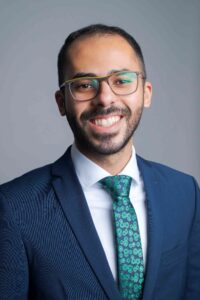
Dr. Ali Alshalah is a public health practitioner from Iraq who has led the national measles and rubella program at the Communicable Diseases Control Center/ Iraqi Ministry of Health. He is a Senior Atlantic Fellow for Health Equity.
Declarations of Interest
No interests to delcare.