Disability has been discussed in surgical training for years, yet the gap between interest and actual understanding remains wide. Commentary has questioned whether surgical training has ever meaningfully created space for surgeons with physical disabilities [1]. While others have warned that awareness alone is no longer enough and that the profession must move beyond acknowledgement to structured action [2], they continue to resurface because the profession still lacks the evidence and frameworks needed to address them in a meaningful way
I write this not as an observer but as someone within the group being discussed. I am a surgeon with a chronic illness that at times imposes physical limitations. I have worked through on call rotas, emergency lists, and training milestones in a system that was never designed with people like me in mind. I train, I operate, and I meet the same expectations as everyone else. Yet I have never encountered a structured approach that explains how surgeons with disabilities should be supported, assessed, or understood. There is no clear guidance for supervisors and no shared language that helps anyone talk about these realities. Most of us move quietly through training because there is no defined path for us to stand on.
The MRCS analysis showing lower Part A (primary surgical training entry exam) pass rates for candidates with disabilities is not widely quoted, but it does expose a familiar problem [3]. We have outcome data, but none of the context needed to understand it, and without that detail the findings tell us more about our knowledge gaps than about the trainees themselves. We still do not know what they mean for real trainees, and without that understanding leaders cannot act on the findings in any meaningful way.
When systems offer no structure, assumptions fill the vacuum. Silence is mistaken for coping. Managing quietly is often read as not needing anything. Supervisors hesitate to ask questions because they have no framework that tells them how to approach the conversation safely or constructively. As a result disability becomes present but invisible, absorbed into personal resilience rather than recognised as something the system should understand.
My own experience has shown me how easy it is for effort to be mistaken for ease [4]. I learned workarounds early. I learned how to meet expectations without drawing attention to the cost of doing so. For a long time, I saw that as personal strength. It was a gradual realisation rather than a dramatic moment, but I eventually understood that coping was not the same as being supported, and that my silence did not protect me so much as prevent the system from learning anything from my experience. That shift, the quiet recognition that resilience can be a barrier as much as an asset, changed the way I see this issue.
If our profession wants to talk seriously about equality, workforce sustainability, or the future of training, then disability cannot remain a footnote. We cannot understand the progression of a trainee, or the fairness of an exam, or the demands of a working environment without knowing how disability interacts with those elements. And the truth is that we do not know. We do not know what helps, what hinders, or what is irrelevant. We do not know how different conditions affect technical learning curves or cognitive load. We do not know how often adjustments work as intended or how often they fail quietly. We simply do not have the data [5].
Better understanding would not only make training fairer but would also make visible the contributions surgeons with disabilities already make. These contributions are not small. They are simply unrecognised because the system has never built a way to see them. Until we build a framework that acknowledges disability as part of surgical identity rather than an exception to it, the profession will continue to overlook a part of its own workforce.
Leadership in this context does not require dramatic gestures. It requires curiosity, clarity, and a willingness to question long standing assumptions about what a surgeon should look like, how training should be structured, and who the system was originally built for. It requires moving past quiet admiration of resilience and toward a more honest understanding of what resilience sometimes hides.
A functional workforce is not created by accident. It is shaped by the systems that train it and by leaders who are willing to examine those systems openly. If we want a profession that reflects the people who work within it and the patients it serves, disability cannot remain in the margins. We need a shared understanding, a coherent framework, and the confidence to acknowledge what we do not yet know.
This is the leadership ask: move beyond assumptions, speak openly where we once stayed silent, and put in place the structures that allow every surgeon, including those outside the traditional template, to be seen, understood, and supported.
References
- Fisher RA. Will there ever be a place for physical disability in surgical training? Bull R Coll Surg Engl 2023;105:366–367.
- Snashall D. Doctors with disabilities: licensed to practise? Clin Med 2009;9:315–319.
- Ellis R, Cleland J, Scrimgeour D, Lee A, Brennan P. The impact of disability on performance in a high-stakes postgraduate surgical examination: a retrospective cohort study. Journal of the Royal Society of Medicine. 2021;115(2):58-68. doi:10.1177/01410768211032573
- Aftab N. Fitness to practise and the disabled surgeon. Bull R Coll Surg Engl. 2025;107(2):113–114.
- Chugh PV, Jones BA, Twomey KE. Disability in surgery – a call to action. JAMA Surg 2025;160:611–612.
Author
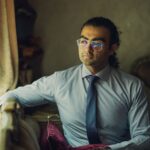
Najeeb Aftab
Najeeb is a General Surgery Registrar working in the NHS with interests in surgical training, leadership, and workforce development. He has lived experience of practising surgery following kidney transplantation and has previously worked on initiatives supporting surgeons with physical disabilities.
Declaration of Interests
The author declares no conflicts of interest relevant to this submission.