Kindness, compassion and authenticity are important now more than ever in our overwhelmed healthcare systems. This story demonstrates how important these values are no matter how difficult the subject matter.
Introducing a young girl who is shy and serious. Never seen without a book in her hands. Her most treasured volume about ‘hospitals’ A 1970s edition: porters wheeling people to X ray, nurses in white hats and navy capes and doctors in pristine white coats.
The daughter of hard-working parents, an older sister, in a family of four generations up to age 100, doing the best they could to care for each other with what they had.
Brought up with the core values of truth and humility. She remembers her fathers lessons on honesty. Emphasising the need to always tell the truth, no matter what. To, own up, stand by any mistakes. Be honest and you will never stand alone.
Immersed in family values of compassion. And mindful of the impact simple kindness and respect hold.
She recalls her mum describing the way people ignored her father sat in his wheelchair talking over his head, a once gifted Welsh tenor before Multiple sclerosis took his voice. Noting the hurt and distress it caused, vowing to treat all as valued individuals.
She went on in life trying to be kind and telling the truth, hoping one day she would walk through some hospital doors to begin her own journey of compassion and helping people get better. 25 years ago, she did just that, for that girl is me.
Early work with those experiencing advanced dementia admitted for tube feeding but sadly dying soon after taught me there will be times when we can’t fix, where medical intervention needs to stand back and we can only offer support and comfort.
Learning this wasn’t a failure, its special, brave and I had a huge capacity in my heart and soul to deliver that and perhaps that is how I ended up in specialist palliative care.
In practice meeting people who had been ‘sent to the Dietitian’ to fix their appetite, stop losing weight or even gain some to have treatment they were unlikely to ever have due to their rapidly advancing disease.
I will describe some of these scenarios where I hope to illustrate the importance of compassionate truth telling and how its kinder to be honest even if are trying to protect from the worst.
Mrs S has end stage fibrotic lung disease. She is losing weight fast, breathless, swallowing and chewing are a chore, mealtimes a battle. Her family want her admitted to hospital to be fed urgently.
I visit her at home, she is comfortable on her sofa.
Her elder sister arrives, angry with questions around why no one is doing anything and letting her sister starve to death’?
‘She can’t go on this way’ she cries.
But that’s the thing, she isn’t going to go on this way, but has anyone told her?
I gently explain that admission won’t fix this, artificial feeding won’t fix this, we can’t fix this.
She is dying.
There is shock, silence, tears, she leaves but returns, sits, holds hands.
It’s hard but they understand. Its normal. No more fighting at mealtimes.
It’s my turn to leave, but the door that was wedged shut through fear is now open, they will talk about so much more.
Mr J has and advanced head and neck tumour, he can’t swallow. His family want him to have a feeding tube placed. It’s booked and twice he changes his mind on the day.
I ask him why? He calmly informs me he never wanted it; he sees his family’s distress but the only reason he felt to pursue this intervention was that he hoped he might not wake up after it. He’d been too scared to say this for fear of hurting her.
His wife is shocked; there is silence and we sit within that. She asks me will it help him get better? I explain no and why. He goes home and stays there. Its time they wouldn’t have had in a hospital ward.
This is difficult stuff, for clinicians and our patients, the easier options could have been admission; don’t dash hopes, avoid the conversation. But who is that easier for?
I once spoke with a patient’s wife, he was dying, she knew that. But she was scared, not of the end, but the police coming to arrest her after his death. She felt she had failed to ‘build him up for treatment he was never well enough to have. She wept and so did I when that conversation ended.
Fundamentally we serve, aiming to protect people from hurt and lack of hope. That is why we work for the NHS. It can feel scary to stop, to ‘give up’ But I hope I can make you see that giving this news with compassion is the kinder route, it holds power, it can be a release and gives back control rather than taking it away as we fear.
The Royal College of Physicians in 2025 state:
‘Anticipating the end of life is an act of clinical courage and kindness’
My ask is the next time you have difficult news to deliver, have courage and remember how the truth can be kind and freeing in so many ways when delivered with compassion and the humanity which links us all eternally.
Author:
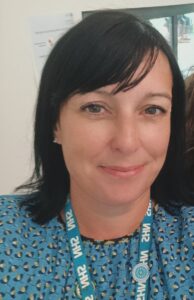
Natalie Harrison
Natalie is a Consultant Dietitian in Malnutrition and Hydration; this is first Consultant Dietitian post in Wales. Prior to this she was a Macmillan specialist Palliative care Dietitian for 23 years. The role involved supporting patients and carers with complex issues around nutrition as disease advanced and they approached end of life.
In 2023, she gained a place on the CLIMB leadership programme, where delegates are required to consider the origin of personal values and how they influence them professionally. To form this into a 5-minute talk delivered to an audience of senior NHS leaders. A deep reflection using storytelling and culminating in an ‘ask’. This blog is a modified version of this talk.
Declaration of Interests:
No interests to disclose.