Dr Elin Harding, Dr Naomi Blower, Ruth Gisborne, Clair Halsey, Nina Amps, and Dr Clea Atkinson
Background:
The Supportive Care Service (SCS) is a multidisciplinary team working cross boundary within Cardiff and Vale University Health Board (CAVUHB). Patients are referred from four specialities: Respiratory, Cardiology, Hepatology and Nephrology. The patients referred have a high symptom burden due to end-organ failure and are deemed to be in the last 1-2 years of their life [1]. The SCS aims to rebalance the previously under-represented access of patients with non-malignant life-limiting conditions to high quality palliative care [2].
The purpose of the SCS is to provide holistic management and optimisation of symptom control with the overall aim of maximising patients’ quality of life. A key focus of the SCS is early, proactive intervention in the community and outpatient environments to prevent unnecessary hospital admissions or to avoid admission altogether if the patient’s preferred place of care or death is at home. Importantly, we support and encourage patients to express their wishes regarding what treatments they would want to receive and under what circumstances. When such wishes and preferences have been expressed, it is essential that these are respected, and we adhere to them as closely as possible [2].
Currently, there are a variety of digital platforms for patient record keeping in use across the health board, and access to these can be both limited and challenging for unscheduled healthcare professionals e.g. paramedics, out-of-hours GPs. This can be a barrier to accessing critical information around patient’s wishes and preferences including preferred place of care and death, as well as symptom management plans in patients with life limiting illness. Currently, despite 80% of people preferring to die at home, approximately 46% die in hospital often within a few days of hospital admission [1].
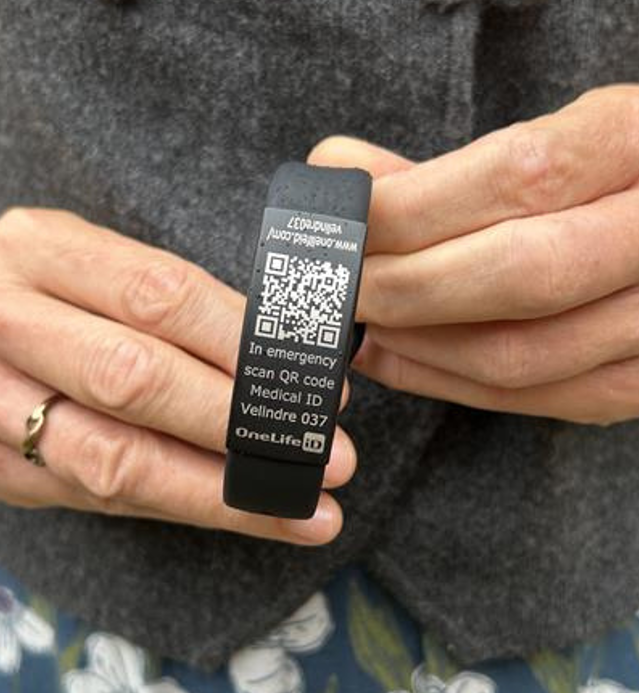
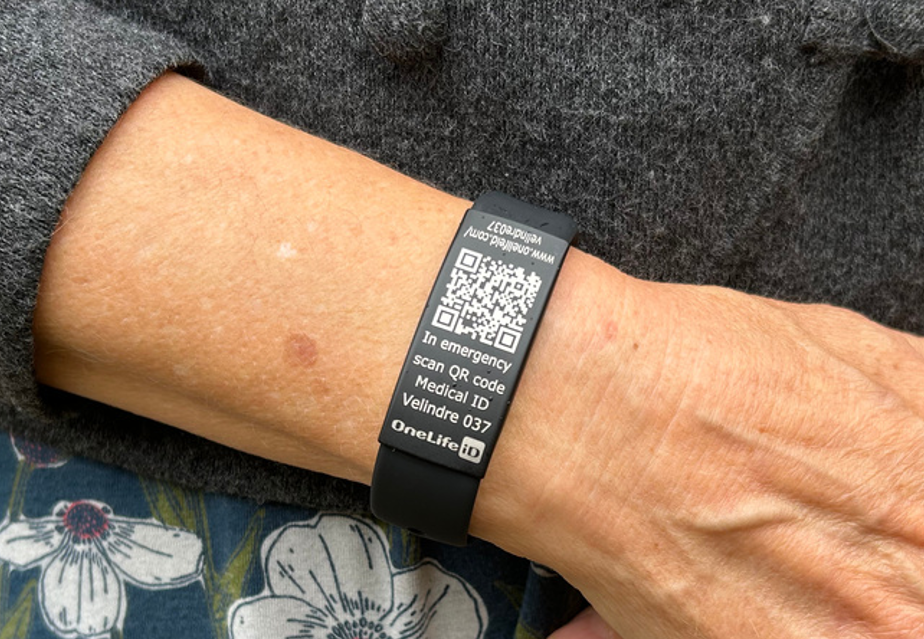
Velindre University NHS Trust (VUNHST) recently published a successful feasibility study whereby a QR-code wristband is used as a patient held record to share this critical information to inform timely decision making in the palliative oncology population (3). The Supportive Care Service in CAVUHB have collaborated with the QR-code Cymru team in VUNHST to adopt this method to complete a feasibility within their patient population (end organ failure), with the aim of proving the concept and transferability of results, before rolling out the QR-code wristbands further.
Method:
The method of this feasibility study was adapted from the published palliative oncology feasibility study in VUNHST (3):
Recruitment aim: 10 participants
Adherence criteria: ≥40% wearing the wristband ‘full time’ – defined as equivalent to wearing a watch. Due to the novel technological intervention within a medical setting, the adherence criterion was aimed at ≥40%.
Retention criteria: acknowledging the success of the feasibility study in VUNHST, it was decided that ≥50% of participants completing the project either through data collection at 8 weeks or patient death was acceptable.
Results:
From 1st October 2025 to 5th November 2025 10 patients were approached, consented and enrolled onto the feasibility study. No patients declined participation. 50% had a diagnosis of end stage heart failure (n=5), 40% had interstitial lung disease (n=4), and 10% had adult congenital heart disease (n=1).
The study met all 3 essential criteria: enrolling 10 patients, 90% adherence and 100% retention.
Similarly to the feasibility study done in palliative oncology patients, a secondary benefit of the wristband activation process is that 2 patients proactively completed a DNACPR which was then uploaded onto their profile.
During the 8-week feasibility study there were 15 access events – 11 of these were associated with healthcare events including home visits by community palliative care teams, ambulance crews, A&E staff and hospital wards. 4 events were not associated with healthcare events, however the patients confirmed they were showing their family. Anecdotal feedback suggests that patients’ relatives also derive positive outcomes from this initiative by increased awareness of patients’ wishes and preferences and feeling empowered to vocalise these to healthcare professionals.
From the 11 access events associated with healthcare events, on 3 occasions the patient and their family felt that the information on the wristband directly impacted the care that they received and ensured it was in line with their documented wishes. The other 8 events it was felt that the information was helpful to the healthcare team, but did not appear to alter subsequent intervention.
We found a theme of increased confidence in this patient group with one patient stating
“I think it is marvellous, I feel more confident to go out and about with it on.”
Conclusion:
This feasibility study confirms the acceptability of the QR-code wristband system as a way of sharing clinically relevant and critical information for patients with life-limiting conditions in the supportive care setting. The results mirrored those of the feasibility study conducted in Velindre Cancer Centre, confirming that although these patients have non-malignant life-limiting conditions, the benefits afforded from the QR code system are transferrable.
This study is limited by its small cohort of patients (n=10); however, the results are overwhelmingly positive and in line with those of the previous study. Additionally, we reached data saturation, as were not achieving any new feedback or results and therefore continuing or expanding the study would have been unlikely to produce new information.
Take home messages:
- QR-code wristbands are feasible and highly acceptable for patients with advanced non-malignant disease
The study achieved excellent recruitment (100%), retention (100%) and adherence (90%), demonstrating strong patient acceptance of the intervention.
- Rapid access to patient wishes can support person-centred care
Healthcare professionals accessed QR-code information during community, ambulance and hospital encounters, with several patients reporting that the information directly influenced care and ensured it aligned with their preferences.
- Benefits extend beyond information sharing alone
The intervention promoted advance care planning, increased patient confidence, and appeared to help families better understand and advocate for patients’ wishes.

Members of the Supportive Care Team at the recent NHS Wales Awards
References:
- Winning Hearts and Minds – BMJ Supportive & Palliative Care Forum (2019). Available at: https://blogs.bmj.com/spcare/2019/11/06/winning-hearts-and-minds/
- Atkinson C, Hughes S, Richards L, et al. Palliation of heart failure: value-based supportive care. BMJ Supportive & Palliative Care 2024;14:e1225-e1233.
- Cahill C, Harding E, Crabtree A, et al. QR-code wristbands for critical information: palliative oncology feasibility study. BMJ Supportive & Palliative Care 2026;16:74-75.
Declarations of interest:
I have read and understood the BMJ Group policy on declaration of interests and declare no competing interests