Authors
Dr Sarah Mitchell, Clinical Associate Professor of Palliative Care, University of Leeds
Dr Suzanne Kite, President, Association for Palliative Medicine, The Leeds Teaching Hospitals Trust
Dr Debbie Talbot, Consultant in Palliative Medicine and NHSE Midlands Regional Clinical lead for PC&EOLC, University Hospitals of Derby and Burton NHS FT and NHSE Midlands
Charlotte Rock, Chief Nurse, St Gemma’s Hospice, Leeds
Dr Mary Miller, Clinical Lead National Audit of Care at the End of Life (NACEL), Oxford University Hospitals NHS Foundation Trust
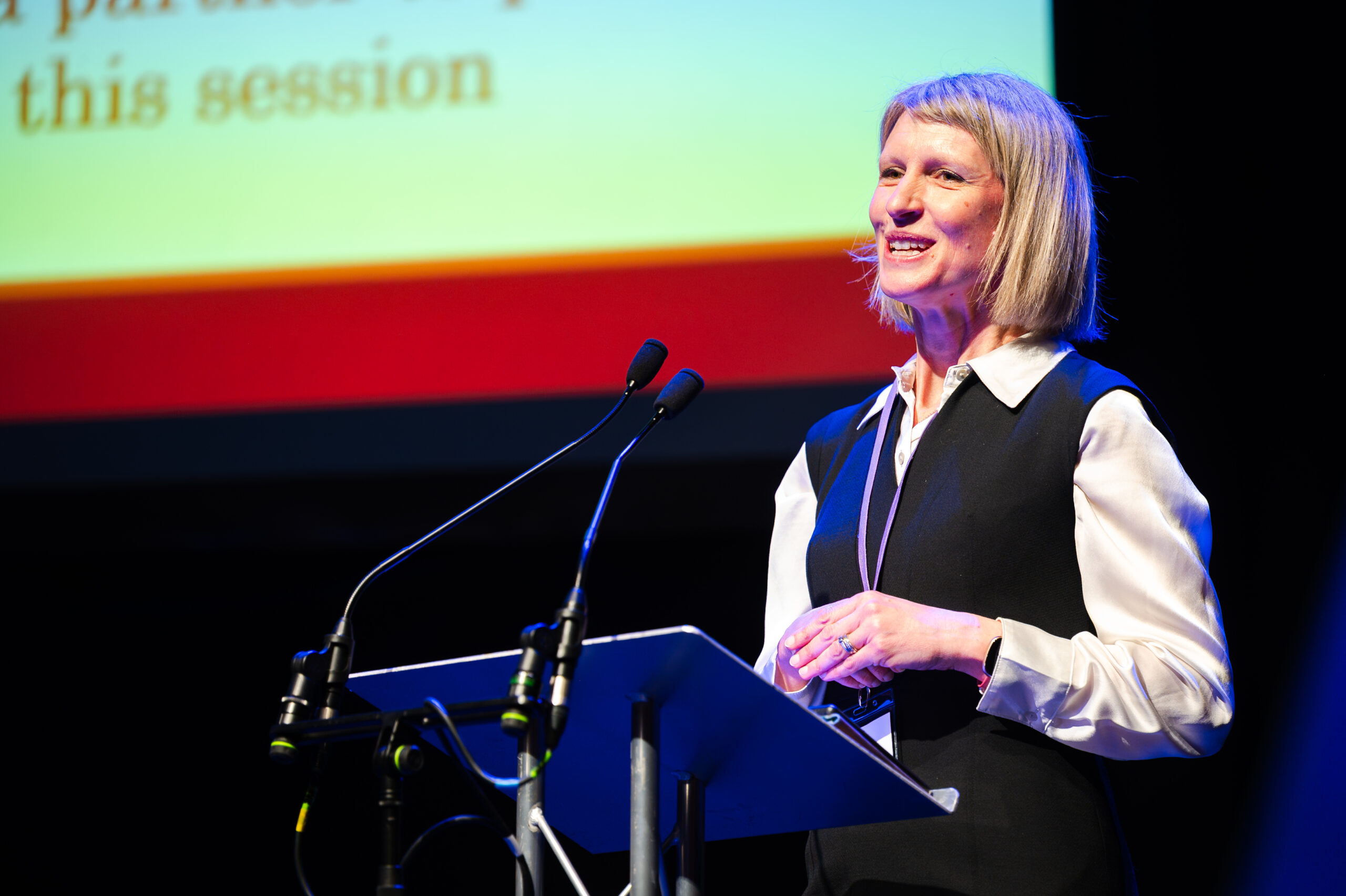
Dr Sarah Mitchell, National Clinical Director for Palliative Care and End-of-Life Care (PC&EOLC) at NHS England. Simon Callaghan Event Photography
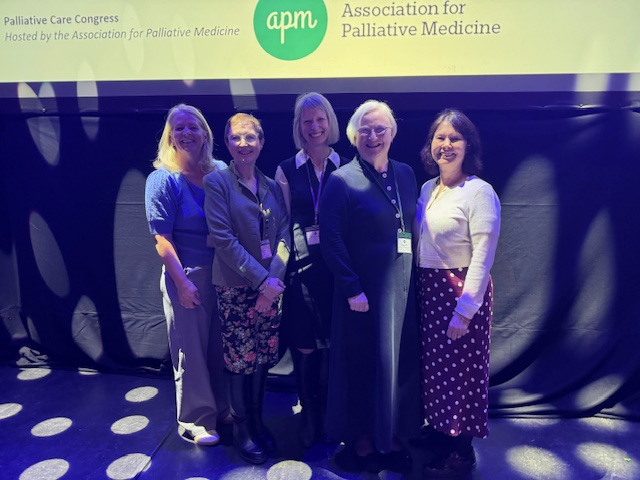
From L-R: Charlotte Rock; Debbie Talbot; Sarah Mitchell; Mary Miller; Suzanne Kite (Personal photo).
Why hold the session?
There is good evidence that high quality clinical leadership is essential to driving up standards for patient care. This is essential to achieve high quality palliative care for all who need it, whoever and wherever they are, and as early as possible. The fast changing landscape of healthcare and ever increasing clinical demands can compromise leadership capacity, there are no defined career pathways to clinical leadership, and there is little focus on training or skills development for clinical leadership roles. This Palliative Care Congress symposium was therefore designed to consider creative opportunities to develop clinical leadership in palliative care.
Nearly 150 people attended the symposium, led by Dr Sarah Mitchell, National Clinical Director for Palliative Care and End-of-Life Care (PC&EOLC) at NHS England. The panel consisted of Dr Mary Miller, Clinical Lead for the National Audit for Care at the End of Life, Dr Debbie Talbot, Regional Clinical Lead for PC&EOLC in the Midlands, NHS England, Charlotte Rock, Chief Nurse at St Gemma’s Hospice, Leeds and Dr Suzanne Kite, President of the Association for Palliative Medicine (APM). Each presented aspects of their leadership journey in palliative care, showcasing examples of clinical leadership in action.
The symposium provided time and space for delegates to reflect on their personal leadership journeys, using a co-coaching approach to guide discussion and feedback, across the following areas:
- Goals for their clinical leadership career
- Timescale to attain those goals
- The challenges and / or obstacles people anticipated might be encountered
- Ways that challenges and obstacles might be approached, and
- What support may be needed and from whom
There was palpable energy in the hall with a great buzz and lively conversation. Feedback was shared using Mentimeter.
What were delegates’ leadership goals ?
Goals were wide-ranging, and realistic. Themes included:
- Being at a career transition point
- Need to embrace a new challenge, to extend oneself.
- Developing and improving services
- To ‘rediscover my mojo’
- Desire to learn from others
- Collaboration
- Developing the team, including succession planning
- Managing uncertainty
- Need for feedback
- Developing confidence
- Developing greater influence
The majority of participants were motivated to progress leadership goals in the next 1-3 years (Figure 1):
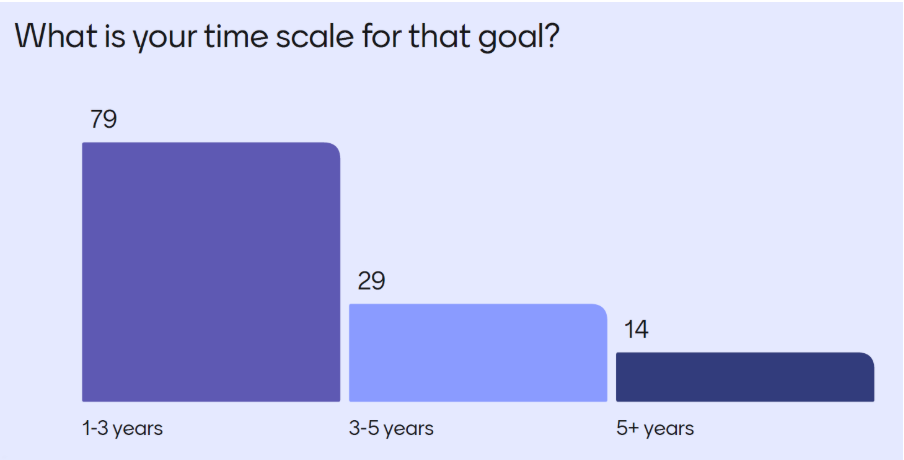
Figure 1: Timescale to achieve career goals in clinical leadership
What challenges and obstacles do delegates face?
Perhaps unsurprisingly, time and funding emerged as key challenges and obstacles. Imposter syndrome was also noted. Wider system culture, including ‘big dog’ energy and resistance to change, also featured prominently as an obstacle to aspiring clinical leaders (Figure 2).
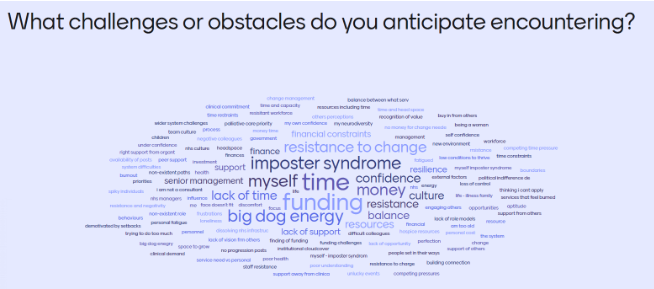
Figure 2: Wordcloud of challenges and obstacles to clinical leadership
What support needs were identified?
The need for support was well recognised, with mentorship, coaching and peer support mentioned frequently, as well as coffee, alcohol and hormone replacement therapy! (Figure 3)
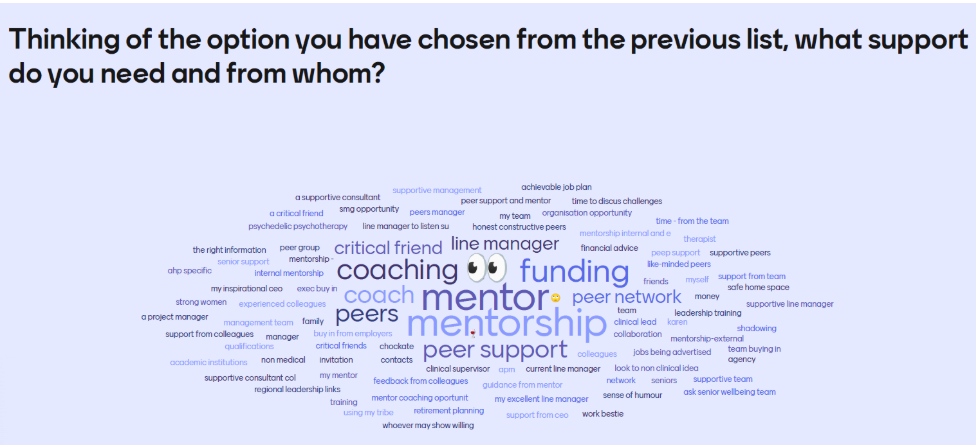
Figure 3: Wordcloud of support required to develop clinical leadership
What leadership development opportunities are available?
The session was open and conversational, and the panel responded to feedback with practical advice. They shared their experiences of overcoming such obstacles, and the fact that imposter syndrome creeps in no matter your seniority or experience.
Formal clinical leadership development opportunities were discussed including resources and opportunities from the Faculty of Medical Leadership and Management https://www.fmlm.ac.uk/ and King’s Fund https://www.kingsfund.org.uk/leadership-development and there are many others including the NHS Clinical Leaders Network https://cln.nhs.uk/iccl/.
Mentorship opportunities may be available locally, and managers and colleagues are often open to being approached for advice and conversations. The need for training in mentorship and coaching, as well as the time commitment involved, can limit availability. ‘Critical friends’ are invaluable and well worth nurturing.
The Association for Palliative Medicine (APM), a specialist society and professional network of medical/health care professionals, is launching a peer support programme, pairing colleagues for conversations on specific challenges. Experienced Palliative Care clinicians offer availability to talk to an APM member who is looking to develop in an area in which they have some experience, for example service development; funding and business cases; career development; leadership; research; education, retiring. The aim is for one initial virtual session for up to 1 hour, and then any follow up discussions as mutually agreed. APM members interested in offering their time or accessing support should contact the APM Secretariat.
Acknowledgements
We were grateful to all those who attended and contributed to this session with such enthusiasm and positivity. We would also like to thank Professor Bee Wee CBE who was involved in the development of the session proposal but sadly unable to attend on the day.
Declarations of Interest
Dr Sarah Mitchell: I am currently the National Clinical Director for Palliative Care and End-of-Life Care, NHS England, and a GP at Primary Care Sheffield.
Dr Suzanne Kite: I am the President of the Association for Palliative Medicine of great Britain and Ireland.
Dr Debbie Talbot: I am an employee of an acute trust provider and NHSE. I hold a voluntary NED role as a school governor.
Charlotte Rock: None.
Dr Mary Miller: None.