Author: Nena Golob, MD, PhD
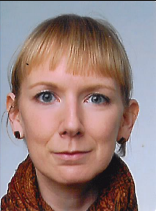
Assistant Professor, Department of Acute Palliative Care
Institute of Oncology Ljubljana, Slovenia
Faculty of Medicine, University of Ljubljana
Email: ngolob@onko-i.si ORCID iD: 0000-0001-5148-4912
Slovenia is a small Central European country with a population of just over two million and a publicly funded healthcare system. Over the last two decades, palliative care has gradually moved from the margins of clinical practice into national health policy. Today, it is formally recognised as an essential component of care for people living with advanced, incurable disease. However, palliative care in Slovenia has developed unevenly, being strongly rooted in oncological institutions and specialties, while remaining poorly accessible in other medical fields and unevenly distributed across the country.
From Pain Clinics to National Policy
The development of palliative care in Slovenia began in the 1980s with hospital-based pain clinics. A more structured approach emerged in the late 1990s and early 2000s, particularly within oncology. The first formal palliative care consultation team was established at the Institute of Oncology Ljubljana in 2000, followed by the opening of an acute palliative care department in 2007 (1).
In 2010, Slovenia adopted a National Palliative Care Programme (1). This marked a significant milestone, formally defining palliative care as a two-level system (basic and specialised) and outlining responsibilities across primary, secondary, and tertiary care (2). The programme aimed to ensure regional organisation, continuity of care, and collaboration between healthcare providers (1).
In 2011, Slovenia’s first mobile palliative care team was established in the region Upper Carniola. A major milestone was reached in 2021 when five hospitals signed the program for mobile palliative care teams with the Health Insurance Institute of Slovenia. This was followed by the Ministry of Health beginning to implement a European-funded project focused on mobile palliative care teams. By the project’s conclusion in May 2026, 14 mobile palliative care teams are expected to be funded. Simultaneously, additional efforts have been directed towards strengthening the entire network of services such as acute palliative care departments, outpatient clinics, and telephone support services across the country (1).
However, while the policy framework exists, its implementation has been inconsistent and there is still no official palliative care legalisation in the country (1).
How Is Palliative Care Organised?
Palliative care in Slovenia is officially divided into:
- Basic palliative care, delivered by general practitioners, community nurses, and hospital specialist of all disciplines
- Specialised palliative care, intended for patients with complex physical, psychosocial, or spiritual needs and delivered by multidisciplinary teams with additional training.
In theory, this structure should allow most patients to be cared for within primary and general hospital settings, with specialised teams supporting the most complex cases (2).
In practice, several systemic challenges undermine this model.
One of the greatest challenges facing palliative care integration in Slovenia is the severe shortage of general practitioners. Since basic palliative care relies heavily on primary care, this workforce crisis has direct consequences for patients with advanced illness (3).
Specialised palliative care teams are increasingly required to compensate for gaps in primary care, often providing support beyond their intended scope. While this reflects professional commitment, it is not a sustainable model for nationwide integration (3).
The Reality of Access: Cancer Still Dominates
Despite broad definitions, palliative care in Slovenia remains predominantly focused on patients with cancer. Most specialised services – including inpatient units, outpatient clinics, and mobile palliative care teams – originated within oncology and continue to serve mainly oncological populations. Nevertheless, early referral to and systematic integration of palliative care within oncology practice is still not routinely implemented. Despite growing awareness, aggressive end-of-life care remains common (4).
Patients with non-malignant conditions are far less likely to receive specialised palliative care. However, specialised palliative care teams for patients with dementia and amyotrophic lateral sclerosis and for children operate.
Advanced care planning is not used in clinical practice (1).
Regional Inequities and Limited Capacity
Specialised palliative care teams currently operate in most statistical regions of Slovenia, including mobile teams providing home visits, consultation services, and telephone support. Nevertheless, service availability varies widely between regions.
Key limitations include:
- Inconsistent availability of specialised support in terms of frequency of residence visits and 24/7 availability of telephone support
- Very limited inpatient specialised palliative care capacity – only two specialised palliative care departments operating and only one continuously functioning nationwide
- There is only one inpatient hospice in the country.
As a result, waiting times, service intensity, and continuity of care depend heavily on geography and individual commitment (1).
According to the EAPC Atlas launched in June 2025, palliative care in Slovenia is underdeveloped, providing only isolated palliative care provision. At the time of the report (October 2024–March 2025), there were 10 palliative care teams nationwide for adults, which translated to 0.47 services per 100,000 people, what was well below the European median of 0.96 services per 100,000 people (4).
Education: Progress, but Not Enough
Education and training in palliative care are minimal: by the end of 2025, one medical school (1/2) offered obligatory formal palliative care training, and only one nursing school did (1 out of 9). There are no palliative care professors in the country and no advanced palliative care educational programmes, such as (sub)specialisation for physicians and nurses. The 40-hour training for residents is recommended for some specialties. The Slovenian Association for Palliative and Hospice Care holds a 60-hour palliative care course for professionals and also organizes a national conference every second year (1).
Summary:
- Palliative care in Slovenia is formally recognised but not yet fully integrated into routine care.
- Access remains uneven and is still largely concentrated on patients with cancer.
- Strengthening primary care, education, and non-oncological pathways is essential for equitable development.
Final Reflection
Slovenia has made important progress in building palliative care structures and professional capacity. Yet true integration remains incomplete. Palliative care is still too often introduced late, applied unevenly across diagnoses, and dependent on local resources rather than guaranteed by the system.
The challenge ahead is not simply to expand services, but to broaden their reach – so that palliative care becomes a natural part of care for all people living with serious illness, regardless of diagnosis, geography, or stage of disease.
Only then can palliative care move from being an added service to becoming a shared responsibility across the healthcare system.
References:
- Golob N, Ebert Moltara M. Inequity in access to palliative care services worldwide and in Slovenia. Radiol Oncol. 2026 Mar. https://reference-global.com/journal/RAON?tab=editorial-board#journal-tabs. Epub ahead of print.
- Ebert Moltara M, Bernot M, Benedik J, Žist A, Golob N, Malačič S, et al. Temeljni pojmi in predlagano izrazoslovje v paliativni oskrbi. Ebert Moltara M, editor. Ljubljana: Slovensko združenje paliativne in hospic oskrbe; 2020.
- Golob N. Aggressiveness of cancer treatment and other medical care in patients with metastatic solid cancer near the end of life [Doctoral dissertation]. [Ljubljana]: University of Ljubljana; 2024.
- Golob N, Oblak T, Čavka L, Kušar M, Šeruga B. Aggressive anticancer treatment in the last 2 weeks of life. ESMO Open. 2024 Mar;9(3):102937. doi:10.1016/j.esmoop.2024.102937
- Garralda E, Tripodoro VA, Ling J, Brennan J, Montero Á, Bastos F, et al. EAPC Atlas of Palliative Care in the European Region 2025. Report.
Declaration of Interests:
I have read and understood the BMJ Group policy on declaration of interests and declare the following interests: none.