Atlantic Fellows for Health Equity brings together health professionals from around the world and across disciplines to build leaders, combat disparities and create community. Its mission is to develop global leaders who not only understand the roots of health inequities but also have the skills and courage to create more equitable organizations and communities.
Each year, fellows share their reflections through Equity Talks — short presentations that highlight their leadership journey and learning during the fellowship. We are proud to bring some of these insights to the BMJ Leader Blog audience.
The blog below was written by Zelalem Dessalegn Demeke, a 2025 Atlantic Fellow for Health Equity based on his Equity Talk.
Two moments profoundly changed how I understand disability, equity. and the urgent need for appropriate assistive technology (AT).
The first happened three years ago during a home visit as part of the University of Gondar’s community-based rehabilitation (CBR) program. After finishing one visit, a young boy approached us and said, “There is a girl in this house. You should see her. She needs help.”
We knocked. No answer.
We entered the small home and found a 12-year-old girl with cerebral palsy locked in a tiny, dark room. She appeared half her age — severely malnourished, never taken outside, left alone all day while her mother worked as a waitress to feed the family.
No one had ever assessed her needs. No one had provided any support. In that moment, I realized therapy alone is not enough. Families need more than sessions; they need access to appropriate assistive technology, economic support, community inclusion and systems that prevent isolation.
Leaving a child with disability hidden behind a locked door is not just a family tragedy; it is a profound equity failure.
The second moment came on a visit to one of Canada’s largest pediatric rehabilitation centers. There I saw children with the same conditions — cerebral palsy, neurodevelopmental disabilities — that I see every day in Ethiopia. But these children looked completely different. They communicated through high-tech devices, moved around using powered mobility, sat comfortably in customized seating systems, played with adapted toys and engaged with their parents.
The clinical diagnoses were similar, yet the outcomes were worlds apart. It was not the disability itself that created this disparity, it was the systems that made the difference.
These experiences drove me to act.
With support from partner organizations, I founded the Grand Assistive Technology Center (GAT) in Gondar, a social enterprise with the goal of ensuring that children with disabilities are given the tools they need to thrive, while empowering their mothers and families to build sustainable futures.
Building Local Solutions Through Assistive Technology and Therapy Programs
At GAT, we work to address the core equity challenge of access to appropriate, affordable and contextually relevant assistive technology. We established a local manufacturing and repair workshop to produce, customize, repair and maintain devices such as wheelchairs, standing frames, seating systems and communication aids. Through a powerful South-South partnership with Shonaquip Social Enterprise in South Africa, we share designs, knowledge and scaling strategies.
To complement AT access, we run a three-week intensive therapy program for parents and caregivers, including those from rural and underserved areas around Gondar. This program brings families to our center for immersive, hands-on training focused on evidence-based interventions that emphasize play, real-life activities and functional improvements.
Parents learn skills to support their child’s development, mobility, independence, and daily care using simple, home-adaptable techniques and locally available materials such as household items. For rural families, who often face transportation barriers to urban clinics, this intensive format provides concentrated support that they can then apply at home.
Integrating Community-Based Rehabilitation (CBR) for Lasting Impact
Our work at GAT builds on the principles of community-based rehabilitation (CBR), a WHO-recommended strategy that promotes rehabilitation, equalization of opportunities, poverty reduction, and social inclusion for people with disabilities through collaborative efforts involving individuals, families, communities and relevant organizations.
By integrating CBR into our model, we extend support beyond urban centers. We train local CBR workers who are part of the community to identify children with disabilities early, conduct basic assessments and facilitate referrals. This grassroots approach helps bridge the rural-urban gap, combats stigma by educating communities, and ensures that families in remote areas receive ongoing follow-up through home visits and group sessions. CBR empowers communities to own the solutions, making interventions more sustainable and culturally appropriate.
The Crucial Role of Parents in Driving Change
In our intensive therapy program, parents actively participate in correcting misconceptions, sharing experiences and building a supportive community. It’s inspiring to see dedicated fathers fully attend,, challenging cultural gender norms and fostering shared responsibility.
We helped formally register the Gondar Association of Parents of Children with Cerebral Palsy as an NGO, transforming parents from isolated individuals into empowered advocates. Through this association, they organize community education, engage local government, and access a revolving fund that enables mothers to start income-generating businesses. This economic empowerment allows parents to prioritize their children’s needs without sacrificing the family’s survival. Our daycare center further supports this by providing safe, stimulating care so parents can work or attend training without worry.
Family participation is key to equity. Our work shows that when parents are involved in goal-setting and therapy selection — rather than just receiving instructions — outcomes improve dramatically. Parents report gaining confidence, hope, and practical skills, leading to better child engagement in daily life and reduced stigma in their communities.
Advocating for Systemic Changes
Rehabilitation services are often confined to cities, leaving rural families isolated. Stigma, lack of awareness, and resource scarcity exacerbate disparities. That is why we conduct awareness campaigns via radio, TV, and community sessions to combat myths and promote inclusion. Community perceptions are shifting — more children are brought outside, attending school, and communicating for the first time. Yet, systemic barriers persist.
We need investments in community support networks, and policies that prioritize AT as a fundamental right. By trusting parent leadership and local innovations, we can create inclusive systems in which rural-urban divides narrow.
Through the AFHE fellowship, I gained leadership skills, a global network, and the courage to scale this work nationally. But far too many children still grow up without appropriate support.
No parent should have to lock her child inside just to survive economically. No child should spend their childhood isolated, hidden and unheard.
My ask is simple, yet urgent: join us in unlocking more doors. Support local, community-led solutions. Trust the leadership of parents and people with disabilities. Invest in systemic changes.
Together, we can build a world where every child — regardless of where they are born—can learn, live, and truly belong.
Author
Zelalem Dessalegn Demeke
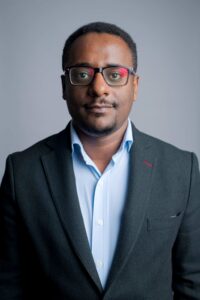
Zelalem is an occupational therapist based in Gondar, Ethiopia. He is the founder of the Grand Assistive Technology Center, a lecturer at the University of Gondar and Ethiopia’s country representative for the Enablement Foundation (formerly Cerebral Palsy Africa). He is a Senior Atlantic Fellow for Health Equity.
Declaration of Interests
No interests to declare.