By Dr Joseph Hawkins, Consultant in Palliative Medicine, Clinical lead for End of Life Care, Ashford and St Peter’s NHS Foundation Trust. Twitter: @JoeHawk75825077
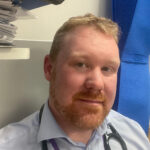
In the latest of our ‘day in the life series’ the Palliative Times is delighted to present a day in the life of a Palliative medicine consultant thanks to guest author Oje Snawkih.
Like most in the health services my day starts with a coffee at 7:45am. I started adding extra shots of espresso just 10 years ago but have now found that if I have less than a quintuple Americano then I sometimes drop off to sleep mid-morning. Following the mane (bit of a prescribing joke there), dose of coffee, carefully balanced with an acid suppressant and some Imodium I am ready for the day.
Our office has the mandatory corner niche with a small model of Dame Cicely, one short genuflection to our lady and founder and I’m logging in to the computers. It is important to log in to no fewer than three computers simultaneously as one never knows which will actually complete the logging in process. After a brief spell of discussion with fellow colleagues about the weather we review our list of patients. A quirk of palliative care is often the lively conversation about whom we are surprised to see alive still. The vagaries of the dying process are such that even after decades we never know whom we will greet the next morning.
Off to see patients- an activity that was often referred to as a safari round in the past. Our first stop is the emergency department. There we greet one catastrophic stroke, the relatives reflecting on how at 93 Mr G has been taken too young from them. Followed by 28 year old end stage cancer patient Ms T who reflects on how she’s had a good life and is at peace now with dying. Ms T goes home with a syringe pump and reassurance and Mr G goes to the stroke ward for a trial of NG feeding that his relatives insist he would have wanted although his advanced dementia means he hadn’t been in a position to say so for the last few years.
It’s 10 am and we’re off to the respiratory ward. After seeing a quarter of the ward and reassuring half of these about the evidence basis for low dose morphine for breathlessness and agreeing how great low dose morphine for breathlessness if with the other half that started it yesterday, we move on; 2 complex pain cases and a new diagnosis of metastatic cancer and it’s lunch.
Lunch is eaten whilst making notes at the one computer that has now completed the login process. I observe about half of our recommendations have been followed and the other notes ignored -plan invariably reads: await palliative review.
The afternoon is filled in a whirl of family meetings, rapid discharges and many phone calls, referrals to community colleagues and emails. At 18:00 I down keyboard and after a collab with the rest of the team we all trudge out of the hospital. Tomorrow will be the same. It’s a fire-fighting sort of job when time is short and outcomes are ultimately certain but it’s so critical that the patient gets to their destination with as little disturbance as possible. Hospitals are poor vessels for these journeys yet I find it hard to say that there are better ships for which to sail the darkest waters. Perhaps it is not about the environment but instead it is the people that carry us through. For that I am grateful to my team.
Also by this Author:
Exploring the unknown
Unconscious competence
Be complex, be palliative